Showing posts with label Fantasy. Show all posts

Friday, 1 September 2017

Ten Years Later

Today is September 1st, 2017. It's nineteen years later, and Albus Potter boarded the Hogwarts express this morning, ten years after we all turned the final page.

It's silly, really, to care so much about an arbitrary date in an imaginary universe. It is only a story, of course.

But maybe not. After all: fiction is hardly the same as not real.

Harry's story meant a lot to me as I grew up. In many ways, it defined large parts of who I am today. The books, after all, matured alongside me. As so many have noted, Harry and his friends grew up in tandem with their audience. Harry's trials were my trials. Not the werewolves and the Dementors, but the crushes and the insecurities. The loneliness, the fear of a confusing world. These I could relate to. Harry's story was my Hogwarts, a place I could always retreat to and feel welcome.

Harry's adventures were my escape and my inspiration, an example of what the fantasy genre does at its best. Not only did the books inspire a lifelong love of reading stories, they helped me define how I came to understand my world. By holding a mirror up to our world, the story showed me the insidious malaises of celebrity worship, mob mentality, and economic, racial, and gender inequality.

Harry helped make me empathetic for the world. In the Luna Lovegood I saw my quirky school peers, and wondered who might need a hand in friendship; in Sirius Black, I saw the father figures in my life, and wondered if perhaps the bad guys aren't always the bad guys. After reading Chamber of Secrets, I remember wondering who the "mudbloods" of my world were, and how I could avoid being complicit in such awfully hateful attitudes. These are just a few examples, though I could easily fill a book with ways the books inspired me to an awareness of and a genuine desire to fight cruelty and injustice.

These desires did not evolve solely out of Harry Potter of course. The series was merely one of numerous forces that shaped the person I've become (a mother who predisposed me to empathy, the crippling loneliness and insecurity of the introverted, to name a few more), but I always felt a special kinship with Harry that filled a hole in my soul where nothing else could. This, perhaps, is why the books transcend the medium of mere literature in my mind. Harry Potter represents the first time I found a book and my connection to its world truly magical. Since then, I've found hundreds of worlds such as this, hundreds of characters that feel truly real to me. But Harry was the first. And the first is always special.

Of course, Harry was never my favourite character in the series. Oh no, far from it. Harry was always flawed, frustrating, and often foolish. But he always had good intentions. And don't we all succumb to our flaws sometime? You see, I am not, and never have been, the favourite character in my own story. Yet Harry gave me hope that perhaps I could still bring some good into the world. Perhaps one day I might even become the favourite character in someone else's story.

Harry's story is not for everyone, and many of those who came late to the series have not connected with the stories as I have. In this way, the series' popularity has perhaps been to its detriment. I would no longer consider myself a "potterhead" (a term I have always resisted, much as continue to resist the asinine "Whovian" label). I no longer reread with the same avid obsession. Yet I still pick up my worn hardcovers every now and then, and revisit a part of myself that will never leave me.

For those who understand I need say no more.

All is well.

September 1st, 2017


Monday, 26 December 2016

My Top Reads of the Year

So, I think most of us can agree that 2016 has been a pretty awful year for the world. On the bright side, I’ve read some good books over the past twelve months. Here are a few of them, in no particular order.

Best of 2016

Age of Myth by Michael J. Sullivan
I knew from the moment I read it that Michael J. Sullivan’s Age of Myth would be right up there on this list. Though technically a prequel to his other works, Sullivan ensures that the book is understandable and entertaining for all. Case in point, I’ve never read any of the author’s work before, and I absolutely loved it. The book is perfect for fans of fantasy and adventure, Tolkien, or anyone who enjoyed Game of Thrones but was confused by all the characters.


Not Alone by Craig A. Falconer
This is one of the best “first contact” stories I’ve encountered. The book starts off a little cartoonish, but quickly becomes a very realistic depiction of how the world might react to such a scenario. With an endearing cast of characters and a realistic and unpredictable plot, this sci-fi is definitely worth checking out. If you’re a fan of audiobooks, I’d strongly recommend the audiobook narrated by James Patrick Cronin.


The View From the Cheap Seats by Neil Gaiman
In The View From the Cheap Seats, fantasy’s most perceptive author regales us with his opinions on everything from books and comics to current events. At times, part memoir, at times part journalism, and at others somewhere in between, this collection of essays is a must read for any fans of the genre, and indeed anyone looking for a perceptive lens through which to view the world. Gaiman’s greatest strength as a writer has always been his empathy, and that shines through here. This collection of essays illustrates why his fiction is so effective, and how exactly he articulates ideas we all sense even if we don’t understand them. If you’re interested, check out my full review here.


The Bands of Mourning by Brandon Sanderson
There isn’t much I can say about Brandon Sanderson that hasn’t been said already. This book is the third in the Wax and Wayne segment of the Mistborn saga, itself only a portion of the larger Cosmere sequence. If these words confuse you, don’t worry. I’ve read most of Sanderson’s books and still don’t entirely understand what’s going on. If you want to read Bands of Mourning, I’d recommend catching up with the rest of the Mistborn books first. If you’ve already done so and you’ve read Bands of Mourning… HOLY SH!T ENDING??!?!?! Something Sanderson does incredibly well is addressing the macro (the grand happenings of the universe he has created) without forgetting the micro (character interactions and the realistic problems faced by individuals). For anyone who’s a fan original and innovative fantasy, I’d really recommend giving Brandon Sanderson a read.


Other books I read in 2016 (not published this year)


The Goblin Emperor by Katherine Addison
Another fantasy entry on this list, Katherine Addison’s The Goblin Emperor is detail-heavy. The amount of world-building the author managed to place into a relatively short volume is quite impressive. The plot isn’t always the most exciting, but it’s a slow and meticulous study of a fantasy society that questions the nature of power, race, and the class system. Think Game of Thrones with a few less heads being crushed.


14 by Peter Clines
I stumbled upon Peter Clines a year or so ago while browsing through Audible, and I’m very happy I did. The second of his books I’ve read, 14 introduces an interesting shared universe that mirrors our own. The books each contain their own cast of characters and are loosely connected by interspersed cameos and a growing threat in the background (remember how Marvel slowly introduced us to its Cinematic Universe?). By combining likeable characters with an interesting mystery, 14 is an easy read with something more for those who care to look.


                                      Between the World and Me by Ta-Nehisi Coates
An incredibly timely book given the problems plaguing the United States right now (as though there was a time when race wasn’t an issue in the US). National correspondent for The Atlantic Ta-Nehisi Coates examines the question of a black man’s place in the world in light of recent high profile events. Framing the work as a letter to his son, Coates’ prose has a poetic imperfection that lends to the work’s aching poignancy. Coates’ love for his son lives on the page. The pain he feels at the deaths of so many others, and the fear for his own son’s life, is like a punch to the gut. Between the World and Me is not a fun book to read, but it is an important one.


Half of a Yellow Sun by Chimamanda Ngozi Adichie
Set in Nigeria during the 1960s, Half of a Yellow Sun follows three major characters as they attempt to deal with the onset of the Biafran War. Steeped in historical details and based on the firsthand accounts of the author’s relatives, the book is a heartbreaking portrayal of the costs of war and the legacies of colonialism. The book provides an intriguing examination of how intellectual ideals and harsh realities often clash. This is a great book for fans of the works of Khaled Hossieni.


The Sculptor by Scott McCloud
This graphic novel is quite unlike anything I’ve ever read. Scott McCloud manages to tap into something all creators, writers, and artists inevitably feel but cannot always articulate. Over a few hundred pages of beautiful and slightly impressionistic artwork, McCloud tells a beautiful story of love, life, and the struggles faced by all those who create. The last hundred pages is quite possibly one of the most powerful things I have ever read. At two in the morning, this story’s conclusion left me in tears yet ultimately hopeful.


A Life With Words by Richard B. Wright
Similar to The Sculptor, Richard B. Wright’s memoir provides us some beautiful insight into the life of a writer. Chronicling his young life and the struggles he faced – both internal and external – while breaking into the Canadian literary scene, A Life With Words speaks to the insecurities felt by all those who think deeply about the world around them. This is a unique memoir in that the author refers to himself in the third person. Some might call this pretentious, but I found this detail spoke to the distance we often feel from the world, something most writers struggle with at some time or another.


For a full list of books I’ve read over the past few years, many of which I’ve reviewed and commented on, check out my Goodreads profile.

Wednesday, 21 December 2016

Rogue One: A unique Star Wars film

Last year’s The Force Awakens provided us with a nostalgia-driven reincarnation of traditional Star Wars themes and motifs. In an obvious attempt to mirror the tone and structure of the Original Trilogy (sometimes too obviously), the film gave us a new cast of heroes to root for, a new set of destinies to unfold over the next few years. Once again, we saw the fate of the galaxy placed in the hands of a few swashbuckling heroes.

Rogue One is a very different sort of film. I wouldn’t necessarily say it’s a better film than last year’s addition to Star Wars canon, but it certainly succeeds in one aspect that The Force Awakens never could: for the first time, we have a truly unique Star Wars story.

When he began the Original Trilogy back in 1977, George Lucas created something incredible. Not only did he spawn a multimedia franchise that has come to infuse itself into the minds of people the world over. Lucas created a self-contained world in the manner of the greatest fantasy stories, a universe in which there is a constant battle between the forces of good and evil. Star Wars isn’t just science fiction: it’s Tolkien in space.

One of the things I’ve always loved about Star Wars is the depth of the world building. Lucas’ original films created a lived-in universe that science fiction had not seen before. In just a few hours of screen times, the films gave the universe depth and history. The audience knew that there were stories behind the stories they witnessed. This is what has allowed for an expanse of comic books and novels spanning thousands of years.


However, the main film series has always been forced (no pun intended) to focus on central themes of good and evil, fate and destiny. The rest of the universe has necessarily been left to the avid fans, those who purposely seek out the world beyond what we see onscreen. In order to make the main canon accessible to casual and serious fans of all ages, the series has been constricted to broad and romantic themes. To focus on anything else within the main story would have changed the nature of Star Wars.

The Original Trilogy revolved around the fate of the entire galaxy, a battle between the forces of good and evil, and an attempt to bring peace and prosperity to the galaxy. It seems that the Sequel Trilogy will be doing the same, dealing with the revival the lost guardians of peace and hope in order to fight an oppressive and cruel regime.

The oft-maligned Prequel Trilogy also dealt with such themes, though it also attempted to expand the world behind the Original Trilogy. One of the reasons these films are so disliked is because they failed to find a balance between capturing the grandiose themes of the Original Trilogy and providing ultimately implausible outer-space society with an element of reality. In its efforts to explain how the Empire came to be, the Prequel Trilogy lost some of the magical spark necessary that tied it into the main canon.


This is where Rogue One comes in. Free from the constraints of the main storyline, Rogue One has a degree of independence – and thus, originality – that no Star Wars film has had. By following characters who are secondary to the grander storyline, the film gives us a chance to see what life under the Empire is like. We see the realities of fighting a rebellion. Rogue One reminds us that the revolution of the Original Trilogy did not happen without sacrifice. Though Han Solo, Luke Skywalker, and Princess Leia might always walk away unscathed, most members of the Rebellion simply don’t have that luxury. Many are forced to do unspeakable acts, watch their friends and families die in horrific manners. Rogue One gives a previously unseen degree of reality to the Star Wars universe, taking some of the romanticism out of the events of the original films.

The characters of Rogue One are not heroes, not in the same sense that Luke and Leia or Finn and Rey are heroes. These characters are criminals and murderers. They’re the people in the background, the fodder for battles that leading heroes always survive.

Occasionally, Rogue One invokes the grandiosity of the main franchise. The Force, and the morality surrounding it, are intrinsic aspects of the Star Wars universe. The difference in this film is that these elements are secondary to the gritty realities of the universe. Rogue One is, perhaps, the most relatable Star Wars film for this very reason. The characters it involves are not perfect. They aren’t black and white, far from it. These people are conflicted and complex, and they are not always good people. The battles they fight are not fun. War is hell, wherever it is fought. Sometimes, Star Wars might forget this. Rogue One does not.

Rogue One manages to maintain a degree of the levity found in the franchise’s other films. The humour is generally grim but often laugh-out-loud. There are enough throwbacks to let us know that this film exists in the same universe, ending just moments before A New Hope. Secondary characters from the Original Trilogy such as Mon Mothma and Grand Moff Tarkin play central roles. R2-D2 and C-3P0 even make a cameo.
Vader's pun game was on point in this film

Another thing Rogue One does well is its treatment of its antagonists. While Orson Krennic might have been a pretty lame flop of a villain (he basically spends the entire movie whining and getting shot down by his superiors), classics such as Wilhuff Tarkin and Darth Vader are given excellent treatment. Though Peter Cushing (the actor who played Tarkin in 1977) is long dead, his character was brought back to life in beautifully rendered (not to mention controversial) CGI that allowed us a new opportunity to examine one of Star Wars’ most interesting villains.

The real villainous spotlight, however, is Darth Vader. Though the infamous Sith Lord only plays a minor role in the film, his two scenes are among the best we’ve ever seen. In keeping with Rogue One’s themes of realism and shades of grey, Vader’s treatment in this film reminds us exactly why his first appearance in A New Hope had the rebel soldiers shaking in their boots. The new film’s final sequence brutally illustrates that, though he might achieve some degree of redemption a few years onwards, Darth Vader is not, at heart, a tragic anti-hero: he is a cold, cruel, and powerful murderer who will cut down anything in his way.

Rogue One is a film that would not have worked if it had been a part of the main series. The deftness with which it handles the complex realities behind this fantasy universe gives me a new hope for this anthology series (pun very much intended). Rogue One is not perfect. At times, one can see the studio’s invisible hand; there are sections of dialogue that I wish had been rewritten. But in its goal of creating a unique atmosphere and realistic tone, Rogue One is most certainly a success.


Wednesday, 29 June 2016

Game of Thrones: The Finale

So now we’ve all had a few days to digest the game of thrones finale, I thought I’d share some thoughts on it. Warning for anyone who hasn’t watched it yet, spoilers are coming.

First thought: holy shit.

This episode was jam packed with far more than I expected. After the amazing “Battle of the Bastards” (arguably the best medieval battle ever seen on TV or film, and certainly the most realistic), I wasn’t sure how “The Winds of Winter” would hold up.

Somehow, the showrunners gave us a finale that not only wrapped up loose plot threads, but also gave us some truly epic moments.

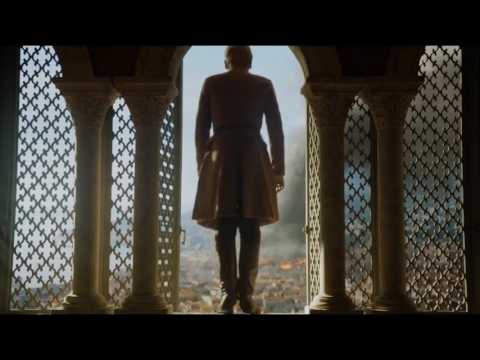
First off, let’s begin with King’s Landing. As much as I despise Cersei, I have to hand it to her: we all underestimated her. The writers have been building up the presence of the wildfire for most of the season and they pulled off the scene in the most spectacular way possible. With excellent performances from Jonathan Pryce and Natalie Dormer, the viewer’s shock mirrors that of the characters as we all realize the depths to which Cersei will go to achieve her goals and get revenge.
I guess this is why they call it King's Landing...

Perhaps the best scene from King’s Landing dealt with the fallout of Cersei’s plan. The silent simplicity of Tommen’s suicide really hammered home the sick brutality of his mother’s actions. In the wake of all this destruction, I really hope Jaime finally comes to his senses and redeems himself by turning against his sister.

Speaking of siblings, the actions of the youngest surviving Stark sibling provided another fantastic scene. The death of Walder Frey, one of the show’s most viscerally sickening characters, was a suitably satisfying moments. Arya’s list is slowly getting shorter, and I can’t wait to see who she crosses off next. Villains of Westeros beware!

Hell yeah a girl is Arya Stark! 
This episode was chock full of such fan-service moments. Tyrion’s naming as Hand of the Queen was not exactly surprising, yet it was immensely rewarding. He is a character who’s had a really rough time of it, and it is quite heartwarming to see him finally get some recognition for all the work he’s done. From the start, Tyrion has grappled with prejudice and discrimination (largely from his family) despite the fact that he is probably the most intelligent character on the show. I’m glad he finally has some of the respect he deserves.

Now, perhaps (plot-wise) the most important moment of the episode was the conclusion of the Tower of Joy scene. We finally see the confirmation of the R+L=J fan theory. The importance of Jon’s parentage cannot be overstated, as his identity as both a Targaryen and a Stark gives him the most legitimate claim to the Iron Throne, even more so than Daenerys. Whether Jon wishes to take advantage of this claim (unlikely) or whether Bran is even able to tell anyone of his discovery (slightly less unlikely) remains to be seen.

The revelation of Jon’s parentage represents one of my only major criticisms of this season: book spoilers. For those who only watch the show, this isn’t a big deal. But for those of us who have read the books, it’s quite disappointing to have the gun jumped on these points that George R.R. Martin has spent decades developing, from Jon’s parentage to the true meaning of the word Hodor. Understandably, such revelations can’t really be helped, but that doesn’t make them any less disappointing.

My only other criticism of the episode (and the season) are two largely useless plotlines, one dealt with in this episode and the other not.

After nine episodes, we finally returned to Dorne and, again, I find myself wondering why this plot tangent is even in the show. The decision to kill Doran Martell seemed a poor move on the writers’ part when it happened, and it seems even more so now. Why did Doran need to die if they were just planning on subbing Ellaria Sand into his storyline? The treatment of Dorne has left me more confused than annoyed, because the choices made don’t seem to follow any discernable logic.

That being said, seeing the colourful Dornish spearmen marching alongside Daenerys is something I’m excited to see next season.

This season’s other tenuous plotline rests in the Iron Islands. Even in the books, the introduction of Euron Greyjoy and the Kingsmoot seemed to come out of left field; in the show, it just seems like an excuse to send Yara and Theon to Slaver’s Bay (now renamed Dragon’s Bay). Surely they could have come up with an easier way to engineer this? Doesn’t the fact that Yara and Theon stole all of his ships kind of makes Euron a lame duck? This is another instance where the writers attempt to address a secondary plotline yet have neither the time nor the space to do it justice.
"I don't care if he's a bastard: he's my king!"

Overall, however, the finale was a great end to another wonderful season. All the pieces are on the board and we’re rapidly hurtling towards what is sure to be an epic finale. The fact that we have to wait another ten months to see what happens next breaks my heart, but it’s sure to be worth it. For all its faults, Game of Thrones has earned (and continues to earn) its spot as the best show on television, just as Jon has earned the title of King in the North. Both have had their ups and downs, and they continue to make mistakes, but, in the end, we remain loyal, and the world is better off for it.

As always, thanks for reading J

Tuesday, 7 June 2016

Game of Thrones: Mid-Season Update

Now that we’re past episode seven, two thirds of the way through the season, I feel it’s time to give an update on my thoughts about Game of Thrones.

Warning for those who are not up to date, this will contain spoilers for the current season. Read at your own peril.

Overall, I’m fairly happy with this season, but I do have my concerns.

As some may recall, I was wary about the (predictable) decision to revive Jon Snow. Five episodes later, and I’m still not entirely sure what I think. As much as I love Kit Harrington’s interpretation of the character, I can’t help but feel that the writers continue to play it safe. With the exception of the episode immediately following his revival, they have largely glossed over the psychological effects of of the ordeal.

Existentially, the realization that there is no life after death is crushing. Yet, other than his decision to reclaim Winterfell, Jon seems to be plodding on as usual. After he sulkily leaves the Night’s Watch, Sansa’s arrival is the only reason the character is not consigned to oblivion. That said, I love the new interaction between the two half siblings. Both characters have been inalterably changed by their experiences, and the showrunners have done a fairly good job of exploring the dynamic between characters who have largely not interacted onscreen.

You should probably ditch the ponytail, Jon... Your dad could pull it off, but you can't.

The reintroduction of Rickon Stark really frustrated me. Understandably, the writers wanted to motivate Jon to take back Winterfell, but the execution was clumsy. Last time we saw him, back in season three, Osha was taking Rickon to Last Hearth, seat of the Umbers, a family who was fiercely loyal to Robb Stark. The knowledge that Rickon was out there, safe, as a Stark ace in the hole, was comforting knowledge against all the horrors they have had to endure. To reintroduce him as the prisoner of Ramsay Bolton seems like an unnecessary ploy to create tension. Personally, I believe there was enough motivation for Jon to rally the north without adding Rickon as a prisoner.

Speaking of artificial tension, I still can’t get over the ramshackle Dornish storyline.
I didn’t talk about it in my other post due to my word count and the assumption that the story would have farther developments. However, we have now gone six episodes since Ellaria Sand and the Sandsnakes staged a coupe in Dorne and there seems to have been no repercussions. We have seen nothing more of these revolutionaries, and there seems to have been little or no reaction throughout the rest of Westeros. Aside from the actual scene’s clumsy execution, this leaves me wondering… why is Dorne even in the show?

In the books, the Dorne plot was dry but intriguing. One knew this was a possible game changer in Westeros’ larger political conflicts. The show’s adaptation of this storyline? Not so much.

While certainly Game of Thrones has done an excellent job of streamlining other plotlines for the TV format, the excursion into Dorne represents a failure to do this. In A Song of Ice and Fire Doran Martell was a wildcard who’d worked for decades to bring about the fall of the Lannisters. When Arriane Martell and the Sand Snakes (who Ellaria and her daughters are based upon) unwittingly threaten this plan, Doran lets them in on it. At no point is he assassinated: as of right now, he’s alive and well and plotting away.

The Sand Snakes look as dissapointed with the Dorne storyline as I feel


For someone who has not read the books, I imagine this plotline seems pointless. For someone who loves the books, it’s downright frustrating. The showrunners need to find a way to wrap it up, as there has not been adequate set up, nor do they have the time, to do it justice.

The Iron Islands plotline is another one that doesn’t fit smoothly into the show’s narrative progression. Even in the source material, the Kingsmoot seemed to come out of left field. In the show, the reintroduction of Balon Greyjoy in addition to new characters seems out of place. The new dynamic between Yara and Theon is really engaging, and both actors give excellent performances, but the politics of the Iron Islands seem inconsequential on the grand scale of the show. I can’t help but feel like this is going to be another plot tangent that is left ultimately unaddressed.

That being said, the show is doing an excellent job of bringing together certain tangents left wide open in the books. George R.R. Martin has always stated his intention to expand from the relative insularity of the first book, into the middle books’ vast wealth of viewpoints and landscapes, before drawing the threads back together for the final books, giving the series a degree of symmetry.

Despite this, we have largely yet to see this closing of threads in the books, with A Dance with Dragons introducing even more viewpoint characters. The show seems to be moving more actively towards this goal, as can be seen in Sansa and Jon’s attempt to rally the north, Arya’s upcoming return to Westeros, and Danaerys’. One senses that the final act of the saga is about to begin.

Perhaps my biggest disappointment about this season is the apparent spoilers for the upcoming Winds of Winter. As George R.R. Martin originally intended to have ASOIAF’s sixth book out before this season, it divulges certain key plot points, such as the apparent identity of the mysterious Coldhands, the nature of the White Walkers, and the possible confirmation of the R+L=J fan theory. That being said, I am by no means jumping on the anti-George R.R. Martin bandwagon. As I’ve said many times, I’d rather he take six years to write a good book than six months to write a bad one. To quote Neil Gaiman for the umpteenth time, “George R.R. Martin is not your bitch.”

Not only is this one of the show's most badass scenes,
it's one of the most important to the plot
Ultimately, despite its flaws, Game of Thrones remains the best show on television (certainly better than whatever The Walking Dead has become) and one of best page to screen adaptations. The problem with a show this good is that its few flaws, even the minor ones, stand out against such strong writing and performances.

This season has seen some epic and powerful moments, such as young Eddard’s duel at the Tower of Joy and the tragically beautiful “hold the door” scene. The reintroduction of the Blackfish, Benjen Stark, and Sandor Clegane seem to promise great things to come.


I’ll probably write another piece once the season is over, so stay tuned.


As always, thanks for reading J

Still

Tuesday, 3 May 2016

Game of Thrones season six and the fate of THAT character

Well, now I’ve finally caught up… it’s time to talk about Game of Thrones! Warning, this review will contain spoilers for season five of the television show, as well as book five in A Song of Ice and Fire, so if you haven’t gotten there yet, don’t read on! There will also be a section with spoilers for the first two episodes of season six, but I’ll flag it before we get there.

The debate over Jon Snow’s fate has raged for months now, as anyone who has been in contact with social media over the past few months knows. Furious arguments have been made for both sides, with Kit Harrington’s haircut and presence on set being used as supposed proof of his still being alive. Generally, I fell into the “dead is dead” camp, to echo D.B. Weiss’ words in the wake of the tragic onscreen death, despite the fact that I am certain he is alive in the books..

I came to this conclusion after a lot of thought, expending far more mental energy than one ought to expend on a fictional character in a fictional world. I knew the death was coming, yet my initial reaction was certainly one of heartbroken denial (why, Ollie, why???); however, I came to revise that prediction after a little bit of back and forth. While Kit Harrington’s presence on set and his refusal to cut a haircut he purportedly hates are certainly compelling evidence, I simply couldn’t bring myself to believe he was still alive.
Fuck you, Ollie.
 Perhaps this was just the pessimist in me. But with the actor and the show runners insisting so fervently to the contrary, how could the character be alive? With all the anticipation of the season, no manner of bringing Jon back to life could possibly live up to the hype. Furthermore, the show is beginning to branch out farther and farther on its own. This season consists entirely of new material that did not originate with George R.R. Martin’s novels. Showrunners David Benieoff and D.B. Weiss have big shoes to fill on this front. Given the relative certainty of Jon’s return, in one form or another, in the novels, killing him permanently on-screen seemed like the best way to boldly distinguish their adaptation as a unique entity.

I was open to the possibility of my being wrong, but expecting to be proved right. As far as I could tell, this was the smartest direction for the show to take.

Sunday night, we found out the truth…

SPOILERS AHEAD. STOP NOW IF YOU DON’T WANT TO READ THEM!!!!!

Seriously, stop reading.

Now.

Look, I’ll even leave you a massive gap in the page.


What happens from now on is your own doing.


Apparently I was wrong, and I’m not sure how I feel about it. Certainly, I leapt for joy like everyone else as Kit Harrington took that frantic gasp and became more than just an on-set cadaver. Yet I had very good reasons for believing he would remain dead, and thought it would be the best thing, artistically, for the show, despite the pain.

I let out an exclamation of joy, just like everyone else.
But was this really a good idea?
To the credit of the writers, they seeded the idea of resurrection as far back as season three with Thoros of Myr’s resurrection of Beric Dondarrion. That Melisandre witnesses this, not to mention continued references to her otherworldly powers, mean that the eventual manner of Jon’s resurrection is not out of place in the show.

My worry is that just because they can do something does not mean they should. On some levels, this decision feels like a bit of a cop out. As I said, Jon’s death would have been an effective way for the show to distinguish itself from the books moving forwards. I think they might have missed an excellent opportunity, and I can’t help but wonder if, perhaps, they simply capitulated to common demand. The show’s writers had an opportunity to include the ultimate red herring while enforcing the brutality of their world.

That said, I do think the manner in which the resurrection was handled was pretty good. I can’t wait to see where they go with Jon, how the process changes him. How will he wrestle back control of the Night’s Watch and fight off the impending march of the White Walkers? People have often complained that Jon is not an interesting character, too close to the archetypal fantasy hero. While I have to agree with this, I have never thought it a bad thing. It is grounding for the viewer to have a character who is intrinsically good in a world with so much ambiguity. Jon’s coming of age story is relatable, and he provides someone we can constantly root for even as Tyrion, Arya, and Daenerys dabble in shades of grey.

Also he has great hair.

Basically, the writer inside me says the showrunners made a mistake while the fanboy inside me is crying tears of joy.

As for the rest of the season, I’m interested to see where Melisandre goes from here. What effects do all these events have on her? If Arya’s storyline stays true to the books, it’s sure to be a fun one. Where will Sansa go from here? Whose head will Robert Strong crush next? Can the writers salvage the Dornish clusterfuck they’ve set in motion?

I’m excited to see where this season goes. Do I think that reviving Jon Snow was the best decision? No. Do I think the writers can pull it off? I hope so. I’ll be sure to share some more of my thoughts as the season progresses, so stay tuned!


As always, thanks for reading J


Wednesday, 13 May 2015

Writing Excuses

So I've been listening to the Writing Excuses podcasts a lot recently. It's a really cool little series, only fifteen minutes long, where a couple of authors discuss their approach to various aspects of writing and the creative process. They are certainly geared towards genre fiction - fantasy and science fiction particularly - just given the background of the authors, but the tips they give about drafting, planning, structure, etcetera are universally useful.

I found about the podcast via reading Brandon Sanderson, who is rapidly becoming one of my favourite authors, but I am ashamed to admit I haven't read any of the other three podcasters' books. I've had one of Dan Wells' books on my shelf for a while but I haven't gotten around to reading it, and I hadn't even heard of Howard Taylor or Mary Robinette Kowal until a few weeks ago.

Even without knowing the authors' works, though, the podcasts are still very helpful and enjoyable. If you're a writer looking for some tips, give them a go!

http://www.writingexcuses.com/

Thursday, 30 April 2015

A Dance with Dragons

So I'm finally caught up with the Song of Ice and Fire books. While A Dance with Dragons certainly wasn't on par with A Storm of Swords, it absolutely was not as bad as fans would lead you to believe. Also, I'm sick of fans whining about the wait time between books. As Neil Gaiman said, George R.R. Martin is not our bitch. He doesn't owe us anything.

Here's my review for the fifth book in the series
https://www.goodreads.com/review/show/1257993405?book_show_action=false