Showing posts with label Reviews. Show all posts

Monday, 29 January 2018

Star Wars in the Twenty-First Century

Last week, I finally got around to seeing The Last Jedi.

I’ll admit, I had some trepidation. I’d seen the Rotten Tomatoes debacle, heard about fan reactions. Low expectations were a part of why I took so long to see the film. The spoiler-free reviews I read seemed pretty promising, but that was almost even more discouraging. Was The Last Jedi just going to be another example of why critical opinions need to be taken with a grain of salt?

As it turned out, The Last Jedi reminded me why I tend to take fan reactions with a grain of salt.

To avoid spoilers, it’s only the last week I’m letting myself read commentary and the fan reactions. But after watching the movie and reading the articles that have slowly accumulated in a folder on my desktop, it seems the main justification for the vitriol is that the movie “absolutely ruins 30 years of cinema lore.”

While there is a kernel of truth in this statement, I have to admit, I find this thinking somewhat reductive.

In responding to that particular Tweet and the countless fans who agree with its sentiment, I’ll start by acknowledging that, yes, The Last Jedi disappointed me. It was a disappointment for the little boy who’s still somewhere in there, that continues to drive my fandom. In many ways, The Last Jedi spit in the face of the little boy who watched the originals as long ago as he can remember before getting his own generation of Star Wars.

This newest movie disappointed the part of me that drives my belief that Return of the Jedi is the best of the series. In many ways, The Last Jedi is the sequel to Episode VI we never saw with The Force Awakens.  Like all good sequels, The Last Jedi addresses the legacy of its predecessor. Luke’s bleak monologues cut to the romantic heart of Return of the Jedi’s neat fantasy ending: the comradery, the optimism, the mythologizing. The kid inside who continues to idolize Luke’s hero’s journey felt pretty hurt and even offended by the writers’ cynical manipulation of the mythology.

I get why people dislike this movie.

But I’m no longer just that kid. I’m also an adult who attempts to engage at least somewhat critically with the cultural artifacts I am exposed to.

My adult reaction to any offense taken after seeing The Last Jedi is basically this… the existence of a third Star Wars trilogy in a universe where George Lucas sold his baby to Disney is fucking offensive.

Most of the problems with both The Force Awakens and The Last Jedi can be directly tied to the fact that the series should not even exist. Any manipulation of fan-favoured franchise lore isn’t the fault of a single writer or his film. His directing is not the reason Luke seems like an entirely different character in this movie. It would have been inevitable. Luke’s story ended with Return of the Jedi.

Any problems arising with his character can be traced back to the increasing commodification of franchises like Star Wars by entertainment giants (remember, Disney also owns Marvel Entertainment). Rian Johnson seems to understand this, and I wonder if this knowledge played a part in his choice to characterize Luke this way. Is it, perhaps, a statement? At the very least, he’s given an alternative to the predictably Yoda imitator we might have ended up with under a different director.

Whatever people say about the prequel trilogy fit, it directly into the creative vision Lucas created. The first follow up trilogy enhanced the franchises core themes and deepened the universe (providing space to revive a dying expanded universe) while mostly acknowledging the original trilogy as its foundation piece. This new trilogy was unplanned, clearly a product of corporate machinations. Our Twitter friend succinctly summarizes what many of us have been thinking since 2012: “cash cow only and goodbye to all that made #StarWars great.”

I’m almost tempted to say the world did end in 2012, because the world where Star Wars fandom is untainted by the postmodern malaise is no more. Hence, I return to my reaction The Last Jedi: I loved it. It’s up there with the best of the canon, precisely because it understands the place Star Wars is at in the 21st century.

One of Star Wars’ many values is its reflection of the culture that produces it. The original trilogy reflected Reagan-era anti-communist rhetoric, centered on a hero’s journey to join the collective fight against the evil Empire. Concerned with diversifying the series mythology, the prequel trilogy is perennially well suited for the post-9/11 world, dissecting empires, republics, and religions. In the prequel trilogy, we witness an outdated order being torn down in a manner that seems both reflective and eerily prophetic. The prequel trilogy remains relevant when we look back from sixteen plus years into the War in Afghanistan.

Rian Johnson asks hard questions that have always existed in the Star Wars franchise but have never been tackled in the film’s main line. He exposes some of the problematic thinking promoted by the original Star Wars series, and the way that dogged faith in organizations and religions can exacerbate these problems. Despite Return of the Jedi’s optimistic ending, I’ve always wondered if the Jedi need to return. It was, after all, (as Luke notes at one point in the new film) the overconfident and bureaucratic Jedi order that allowed Darth Sidious to organize the Empire and order the Jedi’s destruction.

Perhaps, The Last Jedi asks, it is time to stop looking for the past for answers. This, of course, brings the film into conversation with contemporary political debates.

The Republic and the Empire both function as analogies for the American state. Though fans debate over how those analogies map onto the real world, look around the world today. Does any other political entity represent the First Order better than the United Sates and the late capitalist west more generally? Specifically, who better represents the First Order’s incompetent and extremist leadership than those politicians currently sitting in the White House?  

It’s no longer enough to joke about “the only other woman in the galaxy” as some form of empty lip service. It’s time to actively dismantle and deconstruct the institutions that reproduce social ills. On the fandom level, that means criticizing franchises like Star Wars and others when they fail to promote socially diverse narratives. It means questioning elements of fandom that are unwilling to compromise their views about the social ramifications that fiction has.

In terms of the franchise’s creative direction, it means little humanization for the villains and even less romanticism in dealing with them. The Last Jedi excellently deconstructs the naiveté of believing in the good inside. In real life, the good guy doesn’t turn, the eleventh hour plan fails, and a petulant man child is in charge of the most dangerous and powerful military in the galaxy. In real life, a villain’s backstory is second to the threat he poses threat. In the real world, actions define a person.

The Last Jedi is the first truly adult Star Wars film not just because it strays heavily into PG territory but because it is aware of itself and the franchise as a set of cultural artifacts with social ramifications. While the child in me will always love the original trilogy the best, The Last Jedi seems to point towards a future where nine films form a unified progressive update to the six-episode saga my heart still considers the core of Star Wars.


Mishandled, though, J.J. Abrams and Episode IX’s creative team risk dismissing some of the thematic depths reached in The Last Jedi. Though The Last Jedi is certainly one of Star Wars’ best moments, this seems largely due to Rian Johnson’s update to George Lucas’s creative vision. Two years on from The Force Awakens, I’m still unsure how I feel about this new trilogy.

Thursday, 11 January 2018

Black Mirror’s “USS Callister:” Understand but Do Not Defend Toxic Nerd Culture

SPOILER ALERT. Don’t read on if you haven’t yet watched “USS Callister” from season four of Charlie Brooker’s Black Mirror.


Since the series released at the end of December, there has been a lot of talk about “USS Callister,” an exceptionally well promoted episode that was far from the Star Trek parody we all expected. Highly in tune with the show’s best moments, Black Mirror’s most cinematic episode to date is a chilling critique of systemic issues in science fiction fandom and nerd culture at large.

To quickly recap, the plot goes like this: after her first day working for the developers of the online virtual reality videogame Infinity Nannette Cole wakes up in outer space aboard the USS Callister, a ship reminiscent the original USS Enterprise. The crew of the Callister, her coworkers at the Callister Inc. tech company, inform her that she is a digital copy of Nannette created by her boss Robert Daly, and that both the Callister and its crew are trapped in an offline development version of Infinity where Captain Daly rules as a god in a make-believe world.

The episode’s themes are hinted at from the beginning as Nannette explains how she left her previous workplace after being the victim of bullying. Her new workplace is apparently little different, filled with disrespectful interns and gossiping coworkers. Though Daly’s psychopathy is quickly revealed, he is introduced as a shy loner who is clearly mistreated by these people. It is implied that Daly, like Nannette, has long been the victim of bullying. For ten minutes, he is one of Black Mirror’s most relatable characters. The audience understands that, at one point, Daly was perhaps little different from the countless young men who find a much needed (and harmless) escape offered by fandom.

It’s here that some concerns about the episode have arisen. A lot of viewers take issue with the episode arguing that science fiction fans shook the Daly stereotype years ago. This is true. In the age of Elon Musk, The Big Bang Theory, and a third Star Wars trilogy, it’s acceptable and sometimes even cool to be a nerd. But I after watching this episode, I can’t help thinking of the acquaintances who regularly attend Calgary’s Comic Expo every year yet view themselves as somehow different from the cosplayers. Passionate nerds continue to be othered.

Straight out of a little boy's imagination
This increase in mainstream superficial interest in nerd culture has, I think, played a huge role in why the fandoms I love are becoming increasingly taken over by an internet-filtered toxic ethos. For decades, nerd culture has centered on a degree of enforced but proud difference from a superficial mainstream society. The fact that this difference is currently being commodified on every level (Disney’s Marvel Cinematic Universe is a great example of this) is a strong force in the maintenance of toxic nerd culture.

Viewers who insist that Trekkies long ago shook the Daly stereotype misunderstand Brooker’s characterization of Daly as a literally different person inside the game. The sadistic and cruel Captain Daly has escaped so far removed from our reality that he has forgotten the philosophical motivations of the Space Fleet he loves. Meanwhile, programmer Robert Daly is a soft spoken individual who displays a clear sensitivity to the world around him. He seems to maintain the earnest passion we nerds identify with, and he is clearly a person who has long suffered as a social pariah. It is implied that, in the real world, Nannette’s desperate pleas for kindness might have been heard by Robert Daly, if her voice had not been filtered through the ears of Captain Daly.

At the episode’s beginning, Robert Daly was the character with whom I have identified most in four seasons of Black Mirror; he then he became the singular most disgusting villain in the show’s history. This is no accident. In a show where each episode’s core theme can be summed up in a sentence, the juxtaposition of the two aspects of Daly’s character is where this episode’s central concern lies.

Robert Daly
One wonders what sort of a person Robert Daley might have become if he had a strong social group to ground him in reality. Watching this episode, I found myself wondering who Robert Daly might be if he spent his time around a Dungeons and Dragons table rather than an online community populated by the likes of Gamer691. I assume that the reason Aaron Paul’s character picked this tag is that Gamer69 was taken. How might this world have changed a more innocent version of Daly?

The point Brooker is trying to make is that while many are born with the potential for evil actions, few are destined for them. Without a secure anchor to reality, these behaviours can and will escalate. This is especially true in an online space where the loudest voices are generally bullies living out their own fantasies of power.

In the end, Captain Daly has become so isolated from his redeemable characteristics that it is simply unrealistic to suggest he represents any kind of fandom stereotype. The sympathetic and understandable character we were introduced to at the episode’s outset has been replaced entirely by a sociopathic sex predator. Here, Brooker’s message is pretty clear: a monster is a monster is a monster, regardless of circumstance.

At the end of the day, “USS Callister” is an attempt to understand toxic behaviour without in any way condoning it. The episode sends nerd culture a prescient message: while escapism is important, it cannot to happen in isolation from its real world consequences.

But a criticism of toxic nerd culture is too simple a takeaway for Black Mirror. As always, Brooker wants us to look at ourselves and understand that, while horrific actions cannot be excused, a little kindness and human connection goes a long way to preventing them from happening.

Monday, 17 July 2017

A Short Review of Spider-Man: Homecoming

A while back, I wrote a piece addressing my thoughts on Spider-Man joining the Marvel Cinematic Universe. A few months later, when Captain America: Civil War came out, I wrote a review with my updated thoughts on Tom Holland’s web slinger.

Now, after his first solo outing, I am truly convinced: Tom Holland is Peter Parker.
As I’ve said before, the choice to make this incarnation of the character so distinctly innocent, so obviously a kid, serves to give him a degree of relatability that previous incarnations have lacked. 

This Peter Parker, true to the comics, is a fifteen year old social outcast who’s stumbled into a world that’s bigger than he is. And, unlike the Greek Gods and billionaire playboys of this universe, Peter has to deal with the very real struggles of teenaged angst, high school, and dating.
Spider-Man’s ability to navigate the fantasy of superpowers as well as the monotony of daily life is the true strength of his character. This is why he holds such a special place in my heart, as I know he holds a special place in so many others.

With Spider-Man: Homecoming, I am happy to see that the role has been placed in good hands. The tone of the movie is light, paying homage to the world he came from with references to The Avengers and Civil War, with Tony Stark playing a main role. This crossover allows for a certain passing of the franchise torch, and shows a degree of forethought on the part of the writers. With the knowledge that Robert Downey Jr and Chris Evans can’t anchor the franchise forever, Spider-Man: Homecoming marks what I expect to see in the post Infinity War era MCU, with a new generation of superheroes coming to the forefront.

A lot of thought seems to have been put into how Holland’s Parker learns to use his powers. The villain he faces in Homecoming, the Vulture, is arguably relatively weak on the scale of MCU villain hood. The film’s dialogue notes that Vulture would be finished if Iron Man or the Avengers were to notice him. In fighting the Vulture, we see an immature, eager, and clumsy Spider-Man learning his limits and learning to use his powers wisely. This dynamic between Parker and the movie’s villains makes for some entertaining scenes, including one hilarious interrogation scene. On a technical level, this learning curve also allows for a certain break in the monotony of super-hero action scenes. Rather than yet another film where Iron Man fights an army of robots, we have a refreshing mixing and matching of super-powers.

Spider-Man: Homecoming is one of the best films to have been released in Marvel’s shared universe, possibly the best behind only Civil War. More down to earth and relatable than many of its counterparts, Homecoming is a perfect Spider-Man film, staying true to the character and the tone of the world. Unlike many character introductions, this film dispenses with the well-trodden origin story, instead infusing backstory references to the dialogue.

Ultimately, Spider-Man: Homecoming is well worth the time and money to see in theatres, a truly loyal and heartfelt portrayal of my favourite superhero.


9/10

Monday, 17 April 2017

13 Reasons Why: Required Viewing

About a year ago, I wrote a piece the culmination of a bout of depression. My hope was that reading it might encourage others to seek help, as I did. In publishing the piece, I was trying to reach out to other people in positions like mine. I wrote for myself, and for the people who struggle like me.

13 Reasons Why writes for the loved ones, friends, and acquaintances around us.

It seems to me that Netflix’s new binge-driven show is incredibly polarizing. There doesn’t seem to be anyone who’s on the fence about their opinion. Either you love it, or you hate it.

I’m certainly one of the former, one of the people who “gets it,” I guess.

I’m not going to get into defending the show against allegations of unnecessarily graphic rape scenes, glorified suicide, or misrepresented depression. Some of these criticisms are founded, some are plain absurd, but they aren’t what I want to talk about.

I want to talk about why I think this show is one of the most poignantly honest portrayals of depression, teenaged angst, and the cruelties we inflict on one another every day. I’m sure I’ll address some criticisms indirectly.

As I said, the show is not written primarily for those going through depression. It is written for the people around those who are struggling. One thing I was consistently struck with while watching the show is how well it conveyed one simple fact about depression: nobody – and I mean nobody – can truly understand what is going on inside of another person’s head.

Of course, the show’s central conceit revolves around Hannah’s posthumous attempts to illustrate this fact to her classmates. Through recorded tapes sent to everyone who bullied her and everyone who stood by while she was bullied, Hannah sets the record straight, explaining in agonizing detail to her classmates and to her audience how their seemingly small actions can have massive consequences.

Of course, as many have pointed out, there’s a severe degree of implausibility in the story. Would the narrative unfold this way in real life? No, probably not. But that’s not the point. 13 Reasons Why is a show about severe angst, the feeling that the entire world is against you. Such angst does not allow for reality to prevail. Such angst, by its very nature, makes our perception of the world unrealistic.

One thing 13 Reasons Why does so effectively is portray this angst for adults. I’m sure many teens who watch the show are familiar with having their struggles dismissed or ignored: “just try to focus on school;” “it doesn’t last forever;” “we all went through it.”


While these voices generally mean well, such attitudes are dangerously dismissive. For adults – specifically parents and teachers – to portray these attitudes to their kids is to devalue the struggles those kids are going through. When you are a teen, when you’re in high school, surrounded by hundreds of other insecure, confused, and struggling individuals in a microcosm of raging hormones, that angst is real for you. Sure, we can all say that we went through it. But if you find that this is your attitude, ask yourself: was there ever a point where it didn’t feel real? Was there ever a point where those struggles weren’t your entire world?

I found myself thinking a lot about my own high school experience while watching the show. When I was seventeen, I was more a Clay than a Hannah, but I empathize with both characters. Off the top of my head, I can list a dozen names, people who probably don’t even remember my name yet invariably left marks on me through their words or their actions. I hope that in watching the show people like that might come to realize that words and actions that might seem inconsequential to them almost always have consequences: if I, as someone who was innocuous and socially awkward but never bullied harshly, felt the sting of individuals’ words, how must the Hannahs of my school felt?

When I was in high school, I didn’t consider myself depressed. It is only in retrospect that I can apply that label, and understand the reasons I felt like I did.

A lot has been written about the show’s failure to qualify Hannah’s mental illness. While I understand this criticism, I feel it is misplaced. Indeed, I think the fact that Hannah is never defined as clinically depressed is part of what makes the show so effective. In the end, the term “depression” is a somewhat arbitrary and incredibly broad label. 13 Reasons Why focusses on the manifestation of that depression, and how those around us can recognize the signs.

As much as I hate to admit it, there remains a stigma around mental illness. It’s a hot phrase that is often easily dismissed. The result of this is that directly explaining Hannah’s mental illness would have been either unnecessary or alienating. As I’ve said, this is not a show primarily written for those who suffer from mental illness, but one written for those around the sufferer. The jocks of Hannah’s school would have easily dismissed her depression, just as the bullies of my high school would have.


Of course Hannah’s mental illness influenced her reaction to these things, but we already know that. Obviously Hannah was depressed, but directly labelling her as such would have made it far too easy to dismiss the actions of those around her: the bullies who objectified her, the parents who didn’t pay enough attention, or the man who raped her because he thought she “wanted it.” The show is written for the real life people like this.

13 Reasons Why is not a show primarily about the experience of mental illness, but about how we all need to be better at recognizing and understanding the effects our actions have on one another. We simply don’t know what another person is going through. In real life, nobody wears a badge or goes around proclaiming “I’m depressed.” Indeed, many teens probably don’t realize that they are depressed. 13 Reasons Why does not shirk away from the fact that there is often a thin line between clinical depression and general angst, and that drawing a sharp line between these two things should not be our purpose.

There is nothing this show shirks away from. It addresses a wide array of issues with brutal honesty, harnessing its young adult milieu to speak to teens and adults alike. 13 Reasons Why is not a show for the Hannahs of the world, but a show for the Clays and the parents of the world; it is a show for all the guidance counsellors who might dismiss their students and for all the kids who think it’s just a joke, or who think that silence means consent. For this reason, it should be required viewing.


If you think you or someone around you might be consider hurting themselves, there are resources you can reach out to. I know it isn’t easy sometimes. Trust me, I know. But please do it, if not for yourself then for those who love you. Reach out to a friend or family member, a teacher or a co-worker, or call one of these numbers.

KidsHelpPhone Ages 20 Years and Under in Canada 1-800-668-6868
First Nations and Inuit Hope for Wellness 24/7 Help Line 1-855-242-3310
Trans LifeLine – All Ages 1-877-330-6366
24 Crisis Line – 1-403-266-4357

Finally, here are a few resources for further reading:

Monday, 20 March 2017

Logan: A Milestone Superhero Film

On-screen adaptations of comic book superhero stories have been around for decades, but the 2008 release of Iron Man and the growth of the Marvel Cinematic Universe kick-started a generation of blockbusters with superheroes at its core. It’s impossible to go more than a month or two without the release of a new entry into the canon. And while most of these films are hollow reiterations of the same action tropes – relying on beautiful stars and overbearing special effects – Hollywood occasionally produces a masterpiece within the framework of the genre.

Logan is one such masterpiece. Arguably one of the best superhero films of all time and certainly the best X-Men film since X2, the film is reminiscent of last year’s Deadpool, flipping the worn out superhero genre on its head.

After a decade of confusing timelines and alternate continuities, Logan brings the X-Men franchise back to its base. The film deals with concepts that much of the genre seems to forgotten, tackling complex themes you’d never find in an Avengers movie.

The film explores ideas of mortality and pain that Hugh Jackman’s previous solo outing, The Wolverine, introduced. In the year 2029, a visibly aged Logan (who has long given up the mantle of Wolverine) struggles with the slow and steady degradation of his powers. Meanwhile, Patrick Stewart’s equally decrepit Charles Xavier struggles with dementia and seizures.

Embedded in a brutally realistic and vaguely dystopic future, Logan asks uses the framework of the superhero film to ask relevant and timeless questions: what are the psychological and physical effects of aging? What happens when the most powerful mind in the world begins to break down? What happens when the immortal becomes mortal?

Much like Deadpool the film understands where it’s come from. It understands the tangled mess that the X-Men franchise has become, and does not try to resolve it. Where Deadpool addressed this issue with humour, Logan does so with cold, hard reality. Logan exposes the man behind the curtain, highlights the writer’s hand that is so often the curse of the superhero genre. Logan is grounded in reality more than any genre film to be released in the last few years.

In this way, the film tackles issues we’ve all had with the superhero genre. Of course it’s rewarding to see Iron Man fight off a hundred robots and then meet up with Thor, but is that really plausible? Is it really plausible that after 14 films, there hasn’t been a single major character death in the Marvel Cinematic Universe?

Logan calls bullshit. At one point, it is revealed that the young Laura is a fan of the in-universe X-Men comics. Logan’s reaction to the fictionalization of his stories is suitably cynical: “Maybe a quarter of it happened, and not like this.”

Indeed, if we lived in a world with super humans, it would not be a polished and clean one. It would be dirty and scarred, imperfect as our own. Logan knows this.

Logan takes our expectations of the genre – and our disillusionment with it – and crushes them beneath a clawed heel. There are no city-levelling battles, no clash of titans. Stadiums don’t fly and there are no robots. The Wolverine does not fight ninjas. Yes, the film uses its R-rating to the fullest potential, letting Wolverine show us what he is capable of; there is plenty of brutalization and dismemberment, in shocking yet somehow beautiful detail. But these scenes are window dressing. They are not where Logan’s weight lies.

No. Logan’s conflicts are far deeper, far more poignant.

In real life, people die. Mistakes are made. Conflicts are not resolved by the time the credits role. Sometimes, the heroes are not good people. Stories rarely have neat resolutions, and even rarer are those solutions happy ones.

Logan does not have a happy ending. And that’s okay. Because life doesn’t have a happy ending.

Ultimately a beautifully poignant character piece, the movie’s strength lies in the interplay between the two leading actors. In their swan song, both Jackman and Stewart offer their best performances yet, giving new dimensions to their characters as Logan struggles to continue taking care of himself and his mentor. Logan shows how apparently inhuman characters deal with intensely human problems. 

By giving us relatable themes of aging and loss, Logan shows us the true potential of the superhero genre. The struggle of Logan and Charles is our struggle. We all have ghosts, and we all have secrets.

One day, we all lose our powers.

Logan is a story about one man’s attempts to come to terms with the things he has witnessed, what he’s done. An attempt to find purpose in an existence that has become meaningless.

Isn’t that something we can all relate to?

Logan represents the way forward for a genre that has become stymied. It joins the canon of great genre films and, hopefully, marks what we will see in the years to come.

I’m sad to see Hugh Jackman and Patrick Stewart go. I’ll miss their iterations of their characters. But their time was up, and this movie was the perfect way to say goodbye.


Beautiful, powerful, a masterpiece of cinema: for realizing the limits – and therefore the potential – of its genre, Logan is one of the best films I’ve seen in years.

Monday, 26 December 2016

My Top Reads of the Year

So, I think most of us can agree that 2016 has been a pretty awful year for the world. On the bright side, I’ve read some good books over the past twelve months. Here are a few of them, in no particular order.

Best of 2016

Age of Myth by Michael J. Sullivan
I knew from the moment I read it that Michael J. Sullivan’s Age of Myth would be right up there on this list. Though technically a prequel to his other works, Sullivan ensures that the book is understandable and entertaining for all. Case in point, I’ve never read any of the author’s work before, and I absolutely loved it. The book is perfect for fans of fantasy and adventure, Tolkien, or anyone who enjoyed Game of Thrones but was confused by all the characters.


Not Alone by Craig A. Falconer
This is one of the best “first contact” stories I’ve encountered. The book starts off a little cartoonish, but quickly becomes a very realistic depiction of how the world might react to such a scenario. With an endearing cast of characters and a realistic and unpredictable plot, this sci-fi is definitely worth checking out. If you’re a fan of audiobooks, I’d strongly recommend the audiobook narrated by James Patrick Cronin.


The View From the Cheap Seats by Neil Gaiman
In The View From the Cheap Seats, fantasy’s most perceptive author regales us with his opinions on everything from books and comics to current events. At times, part memoir, at times part journalism, and at others somewhere in between, this collection of essays is a must read for any fans of the genre, and indeed anyone looking for a perceptive lens through which to view the world. Gaiman’s greatest strength as a writer has always been his empathy, and that shines through here. This collection of essays illustrates why his fiction is so effective, and how exactly he articulates ideas we all sense even if we don’t understand them. If you’re interested, check out my full review here.


The Bands of Mourning by Brandon Sanderson
There isn’t much I can say about Brandon Sanderson that hasn’t been said already. This book is the third in the Wax and Wayne segment of the Mistborn saga, itself only a portion of the larger Cosmere sequence. If these words confuse you, don’t worry. I’ve read most of Sanderson’s books and still don’t entirely understand what’s going on. If you want to read Bands of Mourning, I’d recommend catching up with the rest of the Mistborn books first. If you’ve already done so and you’ve read Bands of Mourning… HOLY SH!T ENDING??!?!?! Something Sanderson does incredibly well is addressing the macro (the grand happenings of the universe he has created) without forgetting the micro (character interactions and the realistic problems faced by individuals). For anyone who’s a fan original and innovative fantasy, I’d really recommend giving Brandon Sanderson a read.


Other books I read in 2016 (not published this year)


The Goblin Emperor by Katherine Addison
Another fantasy entry on this list, Katherine Addison’s The Goblin Emperor is detail-heavy. The amount of world-building the author managed to place into a relatively short volume is quite impressive. The plot isn’t always the most exciting, but it’s a slow and meticulous study of a fantasy society that questions the nature of power, race, and the class system. Think Game of Thrones with a few less heads being crushed.


14 by Peter Clines
I stumbled upon Peter Clines a year or so ago while browsing through Audible, and I’m very happy I did. The second of his books I’ve read, 14 introduces an interesting shared universe that mirrors our own. The books each contain their own cast of characters and are loosely connected by interspersed cameos and a growing threat in the background (remember how Marvel slowly introduced us to its Cinematic Universe?). By combining likeable characters with an interesting mystery, 14 is an easy read with something more for those who care to look.


                                      Between the World and Me by Ta-Nehisi Coates
An incredibly timely book given the problems plaguing the United States right now (as though there was a time when race wasn’t an issue in the US). National correspondent for The Atlantic Ta-Nehisi Coates examines the question of a black man’s place in the world in light of recent high profile events. Framing the work as a letter to his son, Coates’ prose has a poetic imperfection that lends to the work’s aching poignancy. Coates’ love for his son lives on the page. The pain he feels at the deaths of so many others, and the fear for his own son’s life, is like a punch to the gut. Between the World and Me is not a fun book to read, but it is an important one.


Half of a Yellow Sun by Chimamanda Ngozi Adichie
Set in Nigeria during the 1960s, Half of a Yellow Sun follows three major characters as they attempt to deal with the onset of the Biafran War. Steeped in historical details and based on the firsthand accounts of the author’s relatives, the book is a heartbreaking portrayal of the costs of war and the legacies of colonialism. The book provides an intriguing examination of how intellectual ideals and harsh realities often clash. This is a great book for fans of the works of Khaled Hossieni.


The Sculptor by Scott McCloud
This graphic novel is quite unlike anything I’ve ever read. Scott McCloud manages to tap into something all creators, writers, and artists inevitably feel but cannot always articulate. Over a few hundred pages of beautiful and slightly impressionistic artwork, McCloud tells a beautiful story of love, life, and the struggles faced by all those who create. The last hundred pages is quite possibly one of the most powerful things I have ever read. At two in the morning, this story’s conclusion left me in tears yet ultimately hopeful.


A Life With Words by Richard B. Wright
Similar to The Sculptor, Richard B. Wright’s memoir provides us some beautiful insight into the life of a writer. Chronicling his young life and the struggles he faced – both internal and external – while breaking into the Canadian literary scene, A Life With Words speaks to the insecurities felt by all those who think deeply about the world around them. This is a unique memoir in that the author refers to himself in the third person. Some might call this pretentious, but I found this detail spoke to the distance we often feel from the world, something most writers struggle with at some time or another.


For a full list of books I’ve read over the past few years, many of which I’ve reviewed and commented on, check out my Goodreads profile.

Wednesday, 21 December 2016

Rogue One: A unique Star Wars film

Last year’s The Force Awakens provided us with a nostalgia-driven reincarnation of traditional Star Wars themes and motifs. In an obvious attempt to mirror the tone and structure of the Original Trilogy (sometimes too obviously), the film gave us a new cast of heroes to root for, a new set of destinies to unfold over the next few years. Once again, we saw the fate of the galaxy placed in the hands of a few swashbuckling heroes.

Rogue One is a very different sort of film. I wouldn’t necessarily say it’s a better film than last year’s addition to Star Wars canon, but it certainly succeeds in one aspect that The Force Awakens never could: for the first time, we have a truly unique Star Wars story.

When he began the Original Trilogy back in 1977, George Lucas created something incredible. Not only did he spawn a multimedia franchise that has come to infuse itself into the minds of people the world over. Lucas created a self-contained world in the manner of the greatest fantasy stories, a universe in which there is a constant battle between the forces of good and evil. Star Wars isn’t just science fiction: it’s Tolkien in space.

One of the things I’ve always loved about Star Wars is the depth of the world building. Lucas’ original films created a lived-in universe that science fiction had not seen before. In just a few hours of screen times, the films gave the universe depth and history. The audience knew that there were stories behind the stories they witnessed. This is what has allowed for an expanse of comic books and novels spanning thousands of years.


However, the main film series has always been forced (no pun intended) to focus on central themes of good and evil, fate and destiny. The rest of the universe has necessarily been left to the avid fans, those who purposely seek out the world beyond what we see onscreen. In order to make the main canon accessible to casual and serious fans of all ages, the series has been constricted to broad and romantic themes. To focus on anything else within the main story would have changed the nature of Star Wars.

The Original Trilogy revolved around the fate of the entire galaxy, a battle between the forces of good and evil, and an attempt to bring peace and prosperity to the galaxy. It seems that the Sequel Trilogy will be doing the same, dealing with the revival the lost guardians of peace and hope in order to fight an oppressive and cruel regime.

The oft-maligned Prequel Trilogy also dealt with such themes, though it also attempted to expand the world behind the Original Trilogy. One of the reasons these films are so disliked is because they failed to find a balance between capturing the grandiose themes of the Original Trilogy and providing ultimately implausible outer-space society with an element of reality. In its efforts to explain how the Empire came to be, the Prequel Trilogy lost some of the magical spark necessary that tied it into the main canon.


This is where Rogue One comes in. Free from the constraints of the main storyline, Rogue One has a degree of independence – and thus, originality – that no Star Wars film has had. By following characters who are secondary to the grander storyline, the film gives us a chance to see what life under the Empire is like. We see the realities of fighting a rebellion. Rogue One reminds us that the revolution of the Original Trilogy did not happen without sacrifice. Though Han Solo, Luke Skywalker, and Princess Leia might always walk away unscathed, most members of the Rebellion simply don’t have that luxury. Many are forced to do unspeakable acts, watch their friends and families die in horrific manners. Rogue One gives a previously unseen degree of reality to the Star Wars universe, taking some of the romanticism out of the events of the original films.

The characters of Rogue One are not heroes, not in the same sense that Luke and Leia or Finn and Rey are heroes. These characters are criminals and murderers. They’re the people in the background, the fodder for battles that leading heroes always survive.

Occasionally, Rogue One invokes the grandiosity of the main franchise. The Force, and the morality surrounding it, are intrinsic aspects of the Star Wars universe. The difference in this film is that these elements are secondary to the gritty realities of the universe. Rogue One is, perhaps, the most relatable Star Wars film for this very reason. The characters it involves are not perfect. They aren’t black and white, far from it. These people are conflicted and complex, and they are not always good people. The battles they fight are not fun. War is hell, wherever it is fought. Sometimes, Star Wars might forget this. Rogue One does not.

Rogue One manages to maintain a degree of the levity found in the franchise’s other films. The humour is generally grim but often laugh-out-loud. There are enough throwbacks to let us know that this film exists in the same universe, ending just moments before A New Hope. Secondary characters from the Original Trilogy such as Mon Mothma and Grand Moff Tarkin play central roles. R2-D2 and C-3P0 even make a cameo.
Vader's pun game was on point in this film

Another thing Rogue One does well is its treatment of its antagonists. While Orson Krennic might have been a pretty lame flop of a villain (he basically spends the entire movie whining and getting shot down by his superiors), classics such as Wilhuff Tarkin and Darth Vader are given excellent treatment. Though Peter Cushing (the actor who played Tarkin in 1977) is long dead, his character was brought back to life in beautifully rendered (not to mention controversial) CGI that allowed us a new opportunity to examine one of Star Wars’ most interesting villains.

The real villainous spotlight, however, is Darth Vader. Though the infamous Sith Lord only plays a minor role in the film, his two scenes are among the best we’ve ever seen. In keeping with Rogue One’s themes of realism and shades of grey, Vader’s treatment in this film reminds us exactly why his first appearance in A New Hope had the rebel soldiers shaking in their boots. The new film’s final sequence brutally illustrates that, though he might achieve some degree of redemption a few years onwards, Darth Vader is not, at heart, a tragic anti-hero: he is a cold, cruel, and powerful murderer who will cut down anything in his way.

Rogue One is a film that would not have worked if it had been a part of the main series. The deftness with which it handles the complex realities behind this fantasy universe gives me a new hope for this anthology series (pun very much intended). Rogue One is not perfect. At times, one can see the studio’s invisible hand; there are sections of dialogue that I wish had been rewritten. But in its goal of creating a unique atmosphere and realistic tone, Rogue One is most certainly a success.


Wednesday, 17 August 2016

Why Jared Leto’s Joker exemplifies everything wrong with Suicide Squad

In light of underwhelming critical reception, the performances of a few talented individuals are Suicide Squad’s only saving grace. Jared Leto’s portrayal of the Joker, in particular, has been the subject of much praise, with many fans complaining that he was not given enough screen time. This complaint is surprisingly apt, given that the film’s mishandling of the character represents many problems originating from a case of too-many-cooks-in-the-kitchen.

Just as the film failed to determine a consistent tone, the writers seemed unable to decide whether the Joker was a sub-plot character or a primary villain. This confusion led a sense of pointlessness to the character, especially in light of the previous two years of promotion. Furthermore, despite all the hype surrounding the intensity of Leto’s performance, the end result is rather underwhelming, leaning heavily on Heath Ledger’s previous incarnation of the character.


Throughout the film, we see the Joker attempting to rescue Harley Quinn, the object of his twisted desire… and that’s about it. His plotline is secondary, a tangent that doesn’t really fit with the film’s storyline. Certainly, Leto’s villain is engaging while he’s on camera, yet one feels like they are watching different movies as the story jumps back and forth between the Joker’s pursuit and the Suicide Squad’s mission.

The relationship between Harley Quinn and the Joker is analyzed through clunky flashbacks that do not give either character the depth needed to fully shine. Though the pair are not the only characters introduced in such rushed exposition, they do provide the most prominent example of the writers’ failure to follow the basic “show and don’t tell” rule. Shots of the Joker seducing Dr. Harleen Quinzel are too rushed for the viewer to empathize with the truly appalling nature of their relationship, and the end result is far more unsatisfying than if their backstory had been left a mystery.

Through this twisted relationship, the writers had a perfect opportunity to portray the depth of the Joker’s depravity, the horrifyingly seductive nature of his madness. Instead, they opted to use the Joker as a promotional piece and Harley Quinn as a fetishized sex object. Given that Margot Robbie’s performance was, perhaps, the film’s greatest aspect, it was disappointing to see her constantly tied down to a tangent plotline. The scenes in which the Joker was not mentioned were her strongest by far.

Margot Robbie's performance was the highlight of the film,
but she was continually tied down to a pointless plotline

Suicide Squad reeks of studio meddling, best seen in the handing of the Joker, right down to the casting of Jared Leto. The character seems to serve no purpose other than to create cool shots for the trailers and increase the film’s marketability.

Given how soon Suicide Squad comes after Christopher Nolan’s masterpiece The Dark Knight, comparisons to Heath Ledger’s previous incarnation were inescapable. As Ledger’s Joker was easily one of the greatest cinematic performances in recent memory, any actor taking up the mantle so soon would inevitably do so in his shadow. Viewers wanted to see how Leto would fair, and the studio knew this. Thus, they continually manipulated the Joker’s promotion and portrayal in order to increase hype around him.

Indeed, Leto’s reputation for method acting was probably the reason he was cast in the role. Consider the stories circulating of his intensity on set. According to the reports, Leto was so into character that he terrorized cast and crew with gifts of anal beads, used condoms, and dead animals. Will Smith even went so far as to say that he never met Jared Leto, just the Joker.

This echoes the stories that circulated back in 2008 about Heath Ledger’s method acting and the circumstances of his death. Reportedly, Ledger spent a month locked in his apartment preparing for the role and emerged fully in character, presenting an on-set intensity that few actors could match. Shortly afterwards, he died under initially unclear circumstances. All this led an air of mystery to the film and to the villain, and farther deepened the film’s themes of madness and power.

Unfortunately, intense acting does not always equal a good performance, something Suicide Squad doesn’t seem to realize. Such intensity of acting has to be combined with effective writing and direction, as well as a purpose. In The Dark Knight, Ledger’s performance was used to enhance Nolan’s themes and ideas; in Suicide Squad, a generic summer blockbuster with little substance to it, Leto’s performance seems empty and pretentious.

In scenes like this one, Leto's intensity could have been
used to elevate the film somewhat

Suicide Squad’s Joker owes a lot to his predecessor. The attempted realism, his mobster-like stylization, and the on-set stories of the actors all echo back to Heath Ledger. Regardless of the film’s (many) writing errors around the character, this heavy reliance on his predecessor gives the character a sense of familiarity that doesn’t mesh with the praise Leto has gotten.

Indeed, I found the performance to be quite underwhelming. Was it good? Sure, especially when compared with the rest of the film. Was it amazing? No, not really. If you take away the hype, Jared Leto’s Joker is an unoriginal version of the character with very little to distinguish him from his predecessor. Or any other psychopathic film villain for that matter.

Simply put, Jared Leto’s performance is not as ground-breaking as he would like to imagine.

Suicide Squad was a (sometimes enjoyable) mess. The film couldn’t figure out what it wanted to be, and it relied too heavily on the hype surrounding a single secondary character. Despite being one of the film’s better performances, the writing of Leto’s Joker hindered the development of Margot Robbie’s Harley Quinn (the film’s strongest asset), and caused an already confusing plot to become even more jumbled. All told, Leto's Joker represents a squandered element in a film with so much wasted potential.

Wednesday, 3 August 2016

A review of Neil Gaiman’s The View from the Cheap Seats

As someone who occasionally dabbles in words, I appreciate good writers.

Not just people who understands word choice and syntax (an important and often undervalued skill) or the mechanics of plot, but individuals who understand the unique power that words and stories can hold. In just a few marks on the page, writers have the power to change lives and alter realities, create worlds from nothing. Worlds that are very much real.

While many mediums achieve this goal, writing is uniquely collaborative in the way it does so. Without the input of the reader, writing does not work. The reader is imperative to the creation of a written story, and, as such, each reader’s experience with that work will be different. Middle-Earth would not exist without Tolkien, but neither would it exist without readers to interpret his words and bring his world to life in their minds.

No two readings of a novel, short story, or poem are the same.

When a reader engages a piece of literature, they bring to it their own experiences, their own biases, their own preconceptions. The reader cannot divorce themselves from the context in which they are reading, just as the words themselves cannot be divorced from the context in which they were written. The written work, as it exists in the writer’s head, is not the same as it exists in the reader’s head.

The true nature of the written word, any writing, is in constant flux, existing somewhere between the intentions of the author, the interpretation of the reader, and the context in which the words are written and read.

Neil Gaiman understands this fact better than most.

The View from the Cheap Seats is like an extended conversation with Gaiman, one of those discussions that ranges far from the original point, but from which both parties emerge with a far deeper understanding of one another.

In these essays, introductions, and speeches one is given the impression of knowing Gaiman intimately. He ruminates on all aspects of life, from writing and art, to the power of love and death. Rarely does he state his opinions and beliefs outright, yet they come through loud and clear. Gaiman does not condescend to his reader by assuming that they will share these beliefs; he is an observer, merely explaining the world as he sees it.

Incredibly astute in these observations, Gaiman puts things in terms that are often startlingly simple, yet all the more profound for that simplicity. What shines through in all these pieces is an incredible compassion for and insight into the world around him. Gaiman understands people, what drives them, and the profound power of art and writing.

Gaiman understands the potential of story, and he understands the power of words. Indeed, his particular love of writing, driven by a passion for art in all forms, is the message behind all these works. His understanding of art and life’s intimate love affair is unrivalled.

For those wishing to understand the creative mind, this book is perfect. For those wishing to know that they are not alone the world, this book is perfect. In many ways, this book is perfect, one that everyone should read.


Read Gaiman, and be inspired.

Thursday, 28 July 2016

A Review of Requiem for the American Dream

I recently watched Noam Chomsky’s Requiem for the American Dream. In true Chomsky fashion, the film dismantles the mechanisms of our capitalist society, illustrating clearly exactly how the current economic system serves to keep the rich rich and the poor poor. Some of the ideas in the film are typical Chomsky, but in a world where inequality is a political buzzword, the film could not be any timelier.

For those who aren’t familiar with his work, Noam Chomsky is often regarded as one of the greatest intellectuals of our time. Originally a linguist, he has written over a hundred books in a broad range of fields including history, politics, and philosophy. Chomsky’s views are not for everyone (he is very much a socialist and an anarchist), but even his critics cannot argue against the fact that he is one of the greatest minds of the twentieth century.

In Requiem for the American Dream, Chomsky illustrates the “10 Principles of Concentration of Wealth and Power,” including rules like “Run the Regulators,” “Attack Solidarity,” and “Manufacture Consent.” It is through these methods, Chomsky argues, that America’s so called “one percenters” maintain their own exclusive place among the economic stratosphere. By running the government and manipulating the masses, big business continually marginalizes the working class. Chomsky illustrates here why the American Dream is truly just that: a dream.

The timing of this film is especially fitting, given the current state of American economics and politics. Inequality is at an all-time high, with even the IMF admitting the failure of neoliberalism, breeding a political climate in which candidates like Bernie Sanders and Donald Trump can ride the wave of frustration on both ends of the political spectrum. The increasing polarization of politics is not limited to the United States (as we can see from events like Brexit, or the increasing popularity of nationalist parties); however, as the capitalist standard bearer and the cultural heart of the western world, this phenomenon is, unsurprisingly, most visible in America.

With all this in mind, Chomsky’s diagnosis seems all the more poignant. For those acquainted with Chomsky’s work (a claim that I can only partially make), the film will seem familiar. It’s the classic critique of capitalism laid out in fairly simplistic terms.

It’s this simplicity that makes the film so effective. If one wants an in depth analysis of the problems with capitalism, one reads in-depth works of economic and political theory by Chomsky and others. A seventy minute documentary makes the arguments appealing to a lay audience for whom it is not necessary to understand the intricacies of microeconomics. Indeed, I’d count myself closer to this audience.

The filmmakers do an excellent job of accompanying Chomsky’s analysis with effective and poignant imagery. Chomsky’s words are interspersed with shots of Wall Street juxtaposed against images of the homeless and countless other representations of economic inequality.

One scene in particular stuck with me long after the film ended. When discussing the principle of “Manufacturing Consent,” Chomsky highlights the engineering of society to prioritize material wealth so as to discourage meaningful thought. Accompanying this analysis, we see a shot of perhaps the most appropriate symbol of consumerism, Walmart, overplayed by the words: “A group of teenagers with a free afternoon will go to the shopping mall rather than the library.”

I found this point in the film particularly haunting. By looking around on any given day, one can see the prominence of rampant consumerism. As a society, we, in general, have prioritized frivolous materialism above all else.

As an example, just look at the recent prominence of Pokémon Go. Sure, many of today’s youth are getting outdoors more than ever before. But what is the point of going outside if we never look up from our phones? A plugged in population is far more likely to consent. By focussing on such, ultimately, trivial things (video games, the newest smartphone, or other material possessions), our attention is taken away from meaningful causes. Consumerism, as Chomsky puts it, has become the measure of a good life.

Requiem for the American Dream is filled with such poignant moments, and I hope it will encourage some people to reflect on their lives and their role in society. I don’t hold myself above anyone – I realize I am just as complicit in the system as all those around me. However, I believe it is important for people to think critically and consider their own role in society, something I continually attempt to do.

The film isn’t perfect. It isn’t ground breaking by any means. It relies highly on rhetoric, and recycles some old criticisms of capitalism. But it is this simplicity that makes it accessible for the average viewer. I would highly recommend that everyone go watch it. The film is only seventy minutes long and available on Netflix, so put it on in the background while you’re doing homework or chores. You never know. It might change your perspective a little.


7/10

Wednesday, 29 June 2016

Game of Thrones: The Finale

So now we’ve all had a few days to digest the game of thrones finale, I thought I’d share some thoughts on it. Warning for anyone who hasn’t watched it yet, spoilers are coming.

First thought: holy shit.

This episode was jam packed with far more than I expected. After the amazing “Battle of the Bastards” (arguably the best medieval battle ever seen on TV or film, and certainly the most realistic), I wasn’t sure how “The Winds of Winter” would hold up.

Somehow, the showrunners gave us a finale that not only wrapped up loose plot threads, but also gave us some truly epic moments.

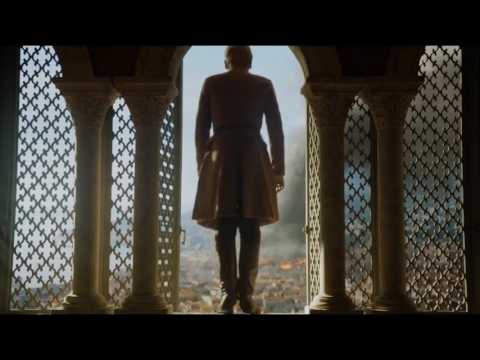
First off, let’s begin with King’s Landing. As much as I despise Cersei, I have to hand it to her: we all underestimated her. The writers have been building up the presence of the wildfire for most of the season and they pulled off the scene in the most spectacular way possible. With excellent performances from Jonathan Pryce and Natalie Dormer, the viewer’s shock mirrors that of the characters as we all realize the depths to which Cersei will go to achieve her goals and get revenge.
I guess this is why they call it King's Landing...

Perhaps the best scene from King’s Landing dealt with the fallout of Cersei’s plan. The silent simplicity of Tommen’s suicide really hammered home the sick brutality of his mother’s actions. In the wake of all this destruction, I really hope Jaime finally comes to his senses and redeems himself by turning against his sister.

Speaking of siblings, the actions of the youngest surviving Stark sibling provided another fantastic scene. The death of Walder Frey, one of the show’s most viscerally sickening characters, was a suitably satisfying moments. Arya’s list is slowly getting shorter, and I can’t wait to see who she crosses off next. Villains of Westeros beware!

Hell yeah a girl is Arya Stark! 
This episode was chock full of such fan-service moments. Tyrion’s naming as Hand of the Queen was not exactly surprising, yet it was immensely rewarding. He is a character who’s had a really rough time of it, and it is quite heartwarming to see him finally get some recognition for all the work he’s done. From the start, Tyrion has grappled with prejudice and discrimination (largely from his family) despite the fact that he is probably the most intelligent character on the show. I’m glad he finally has some of the respect he deserves.

Now, perhaps (plot-wise) the most important moment of the episode was the conclusion of the Tower of Joy scene. We finally see the confirmation of the R+L=J fan theory. The importance of Jon’s parentage cannot be overstated, as his identity as both a Targaryen and a Stark gives him the most legitimate claim to the Iron Throne, even more so than Daenerys. Whether Jon wishes to take advantage of this claim (unlikely) or whether Bran is even able to tell anyone of his discovery (slightly less unlikely) remains to be seen.

The revelation of Jon’s parentage represents one of my only major criticisms of this season: book spoilers. For those who only watch the show, this isn’t a big deal. But for those of us who have read the books, it’s quite disappointing to have the gun jumped on these points that George R.R. Martin has spent decades developing, from Jon’s parentage to the true meaning of the word Hodor. Understandably, such revelations can’t really be helped, but that doesn’t make them any less disappointing.

My only other criticism of the episode (and the season) are two largely useless plotlines, one dealt with in this episode and the other not.

After nine episodes, we finally returned to Dorne and, again, I find myself wondering why this plot tangent is even in the show. The decision to kill Doran Martell seemed a poor move on the writers’ part when it happened, and it seems even more so now. Why did Doran need to die if they were just planning on subbing Ellaria Sand into his storyline? The treatment of Dorne has left me more confused than annoyed, because the choices made don’t seem to follow any discernable logic.

That being said, seeing the colourful Dornish spearmen marching alongside Daenerys is something I’m excited to see next season.

This season’s other tenuous plotline rests in the Iron Islands. Even in the books, the introduction of Euron Greyjoy and the Kingsmoot seemed to come out of left field; in the show, it just seems like an excuse to send Yara and Theon to Slaver’s Bay (now renamed Dragon’s Bay). Surely they could have come up with an easier way to engineer this? Doesn’t the fact that Yara and Theon stole all of his ships kind of makes Euron a lame duck? This is another instance where the writers attempt to address a secondary plotline yet have neither the time nor the space to do it justice.
"I don't care if he's a bastard: he's my king!"

Overall, however, the finale was a great end to another wonderful season. All the pieces are on the board and we’re rapidly hurtling towards what is sure to be an epic finale. The fact that we have to wait another ten months to see what happens next breaks my heart, but it’s sure to be worth it. For all its faults, Game of Thrones has earned (and continues to earn) its spot as the best show on television, just as Jon has earned the title of King in the North. Both have had their ups and downs, and they continue to make mistakes, but, in the end, we remain loyal, and the world is better off for it.

As always, thanks for reading J